The PREVENT ASCVD calculator estimates your 10-year and 30-year risk of a heart attack, stroke or heart failure using the American Heart Association’s 2023 PREVENT equations, and the tool on this page lets you run that calculation in seconds. Unlike older scores, this race-free model folds in kidney function and metabolic health, so it can flag cardiovascular risk earlier and more precisely. Use the estimate below to inform a conversation with your clinician not to replace one.
Cardiovascular–kidney–metabolic risk
PREVENT ASCVD Calculator
Estimate 10-year and 30-year risk of ASCVD, total cardiovascular disease and heart failure with the American Heart Association’s 2023 PREVENT base equations. For adults aged 30–79 without known cardiovascular disease.
Worked calculation — 10-year ASCVD
PREVENT is a sex-specific logistic model. Each input is centred and transformed, multiplied by its published β coefficient, summed to a log-odds, then converted to a probability:
Transformed inputs feeding the sum:
| Term | Value (x) | β | β·x |
|---|
Cholesterol is converted mg/dL → mmol/L (×0.02586). Non-HDL = total − HDL. BMI terms apply to the heart-failure model only.
10-year ASCVD risk categories (2026 ACC/AHA)
| Category | 10-year ASCVD risk |
|---|---|
| Low | < 3% |
| Borderline | 3% to < 5% |
| Intermediate | 5% to < 10% |
| High | ≥ 10% |
Validated input ranges
| Input | Range used by this tool |
|---|---|
| Age | 30–79 years (scope of the equations) |
| Total cholesterol | 130–320 mg/dL (3.36–8.28 mmol/L) |
| HDL cholesterol | 20–100 mg/dL (0.52–2.59 mmol/L) |
| Systolic BP | 90–180 mmHg |
| BMI | 18.5–39.9 kg/m² |
| eGFR | 15–140 mL/min/1.73m² |
Values outside these ranges are flagged; the tool still shows an estimate but treats it as outside the validated range. The equations do not apply to people with existing ASCVD (that is secondary prevention) or to ages under 30 or over 79.
Primary sources
• Khan SS, Matsushita K, Sang Y, et al. Development and Validation of the American Heart Association’s PREVENT Equations. Circulation. 2024;149(6):430–449. doi:10.1161/CIRCULATIONAHA.123.067626
• American Heart Association. About the PREVENT calculator (professional resource hub).
• 2026 ACC/AHA multi-society Guideline on the Management of Dyslipidemia, Circulation 2026 — source of the 10-year ASCVD risk categories.
• Coefficient values cross-checked against the open-source preventr implementation (MIT) and validated against the published Table S25 worked example.
Full disclaimer & how to report a problem
This calculator is an educational reference published by clinicaltoolslibrary.com. It is not medical advice, a diagnosis, or a prescription, and it does not recommend any treatment. Estimates are based on population data from the PREVENT equations and depend entirely on the values entered; individual risk may differ. The equations apply to adults aged 30–79 without known cardiovascular disease.
Report an error in this tool to clinicaltoolslibrary.com via the site’s contact page. For a suspected adverse event related to a medication, report to FDA MedWatch. For anything about your own health, contact a qualified clinician.

How the PREVENT ASCVD calculator works
The PREVENT ASCVD calculator is built on the American Heart Association’s Predicting Risk of cardiovascular disease EVENTs (PREVENT) equations, published in 2023 and validated on more than six million U.S. adults. It is designed for adults aged 30–79 who do not already have known cardiovascular disease. The equations are sex-specific and, importantly, do not use race as a variable, reflecting the position that race is a social rather than biological factor.
What the calculator asks for
The base model uses a short list of routine measurements: age, sex, total and HDL cholesterol, systolic blood pressure, whether you take blood-pressure or statin medication, diabetes status, smoking status, body mass index (BMI) and estimated glomerular filtration rate (eGFR, a measure of kidney function). Three optional inputs — haemoglobin A1c, urine albumin-to-creatinine ratio and a social deprivation index — can refine the estimate further when they are available.
What your three results mean
PREVENT reports three distinct outcomes, each over both a 10-year and a 30-year horizon: total cardiovascular disease, ASCVD (atherosclerotic events such as heart attack and stroke) and, for the first time in a mainstream tool, heart failure. Current guidance sorts the 10-year ASCVD estimate into low (under 3%), borderline (3% to under 5%), intermediate (5% to under 10%) and high (10% or higher). These bands help you and your clinician weigh whether lifestyle changes alone are enough or whether medication should be discussed.
What is ASCVD?
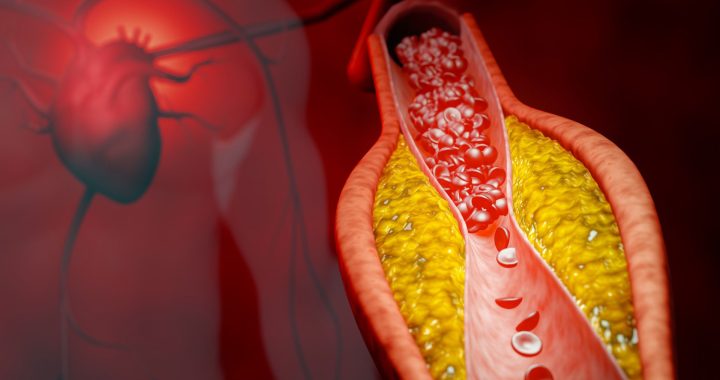
ASCVD stands for atherosclerotic cardiovascular disease — the family of conditions caused by plaque (cholesterol and other material) building up inside the arteries. As plaque narrows or blocks vessels, or ruptures to form a clot, it can trigger a heart attack, an ischaemic stroke, or peripheral artery disease. It is the leading driver of cardiovascular death, which is why estimating and lowering ASCVD risk is a cornerstone of preventive care.
ASCVD ICD-10 codes
“ASCVD” is a clinical umbrella term rather than a single billing code, so coders map it to the affected vascular bed. The most commonly used code for atherosclerotic heart disease of a native coronary artery without angina is I25.10, while unspecified atherosclerosis is coded as I70.90. Related events carry their own codes — for example, cerebral infarction (stroke) under the I63 series and peripheral atherosclerosis under I70.2–. Always code to the documented condition and site; the examples here are for orientation only.
PREVENT vs. the ACC ASCVD Risk Estimator Plus
Many clinicians know the older ACC ASCVD Risk Estimator Plus, which is built on the 2013 Pooled Cohort Equations (PCE). PREVENT does not simply replace it — the American College of Cardiology’s current CVD Risk Estimator Plus app now houses both models. The practical differences matter, because the Pooled Cohort Equations were shown to overestimate 10-year risk substantially in many populations, and the 2026 ACC/AHA dyslipidemia guideline now recommends PREVENT over the PCE for primary-prevention risk assessment in adults aged 30–79.
| Feature | PREVENT (2023) | ASCVD Risk Estimator Plus / PCE (2013) |
|---|---|---|
| Age range | 30–79 | 40–79 |
| Uses race? | No (race-free) | Yes |
| Time horizons | 10-year and 30-year | 10-year and lifetime |
| Outcomes | Total CVD, ASCVD, heart failure | ASCVD only |
| Kidney & metabolic inputs | Includes eGFR and BMI | Not included |
| Guideline status (2026) | Preferred for primary prevention | Still available; tended to overestimate risk |
ASCVD prevention: guidelines and lipid-lowering therapy
Risk estimation is only useful if it leads to action. The 2026 ACC/AHA multi-society dyslipidemia guideline pairs the PREVENT-ASCVD score with clear treatment thresholds and targets. In primary prevention, LDL-lowering therapy may be considered at a 10-year risk of 3% to under 5% and should be considered at 5% to under 10%, always alongside a personalised risk discussion.
ASCVD secondary prevention guidelines
Secondary prevention applies once you already have established ASCVD — a prior heart attack, stroke, or revascularisation. Here the guidance is more aggressive: high-intensity statin therapy for most patients, with an LDL-cholesterol goal of under 55 mg/dL (1.4 mmol/L) and non-HDL cholesterol under 85 mg/dL (2.2 mmol/L) for those at very high risk. The consistent theme across guidelines is that, for high-risk patients, lower LDL is generally better.
Lipid-lowering drugs for secondary prevention (2025–2026)
Statins remain the foundation of lipid-lowering therapy. When a maximally tolerated statin does not reach goal, guidelines recommend adding non-statin agents based on the patient’s risk and characteristics.
| Class | Examples | Typical role |
|---|---|---|
| High-intensity statins | Atorvastatin, rosuvastatin | First-line; lower LDL by roughly 50% or more |
| Cholesterol-absorption inhibitor | Ezetimibe | First add-on when statin alone is insufficient |
| PCSK9 monoclonal antibodies | Alirocumab, evolocumab | Add-on for very high risk not at goal on statin plus ezetimibe |
| Other add-ons | Bempedoic acid; inclisiran (siRNA) | Alternatives for statin intolerance or residual risk |
Drug choice, dose and monitoring are individual decisions. Do not start, stop or change any medication based on this page — follow your prescriber, and confirm every figure with them.
ASCVD support and resources
Living with or preventing ASCVD is easier with reliable information and support. For patient-friendly explanations of risk, cholesterol and prevention, the American Heart Association is a strong starting point, and the AHA’s clinician-facing PREVENT resource hub explains the equations in depth. On this site, you can also explore our related LDL cholesterol calculator and eGFR calculator to gather the inputs this calculator needs. If you have symptoms such as chest pain or sudden weakness, seek emergency care rather than relying on any online tool.
Frequently asked questions
What is the PREVENT ASCVD calculator used for?
It estimates a person’s 10-year and 30-year risk of cardiovascular disease — including heart attack, stroke and heart failure — to guide prevention decisions such as lifestyle changes and whether to start lipid-lowering or blood-pressure therapy. It is intended for adults aged 30–79 without known cardiovascular disease.
What is the difference between PREVENT and the old ASCVD Risk Estimator?
PREVENT is race-free, covers ages 30–79, reports 10-year and 30-year risk, and adds heart failure plus kidney and metabolic inputs (eGFR and BMI). The older ASCVD Risk Estimator Plus uses the 2013 Pooled Cohort Equations, includes race, starts at age 40, and tended to overestimate 10-year risk. The 2026 ACC/AHA guideline now prefers PREVENT for primary prevention.
What is the ICD-10 code for ASCVD?
There is no single code for ASCVD. Atherosclerotic heart disease of a native coronary artery without angina is coded I25.10, and unspecified atherosclerosis is I70.90. Related events use their own codes, such as the I63 series for cerebral infarction. Code to the documented diagnosis and site.
What LDL goal applies after an ASCVD event?
For secondary prevention in people at very high risk, the 2026 ACC/AHA dyslipidemia guideline recommends an LDL-cholesterol goal below 55 mg/dL (1.4 mmol/L) and non-HDL cholesterol below 85 mg/dL (2.2 mmol/L), usually with high-intensity statin therapy and add-on agents if needed.
Is the PREVENT ASCVD calculator a substitute for medical advice?
No. It is an educational estimate based on population data. Results can vary with the exact inputs used, and they do not account for every individual factor. Always confirm your figures and any treatment plan with a qualified clinician.
Sources and disclaimer
Key sources include the American Heart Association’s PREVENT announcement and professional PREVENT overview, the ACC/AHA 2026 dyslipidemia guideline summary and its full text in Circulation, and the ACC CVD Risk Estimator Plus. This content is an educational reference published by clinicaltoolslibrary.com; it is not medical advice, a diagnosis or a prescription. Follow your own clinician and confirm any figures before acting on them.