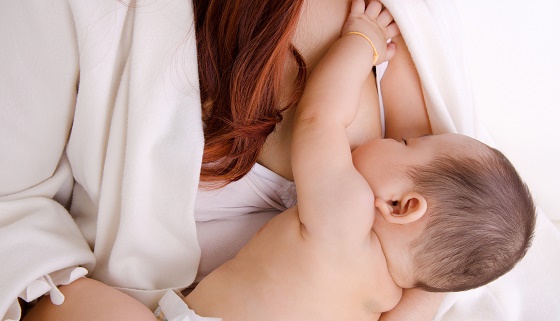
A breastfeeding calorie calculator estimates how many extra calories you need each day to make breast milk while staying well nourished yourself. Because milk production is one of the most energy-demanding things the body does, most nursing parents need roughly 330 to 500 additional calories a day on top of their normal maintenance energy. This page explains the numbers behind the tool, gives you a quick reference chart, and answers the questions parents ask most — as an educational reference, not medical advice.
Breastfeeding Calorie Calculator
Estimate daily energy, protein and fluid needs during lactation — built from your maintenance calories plus the measured energy cost of making milk, with a hard safe-minimum guardrail.
Your details
Feeding & goal
Estimated daily target
Show the math
| Feeding situation | Extra kcal/day | Notes |
|---|---|---|
| Exclusive breastfeeding, 0–6 months (maintaining) | +450 to 500 | Full energy cost of milk added to diet |
| Exclusive breastfeeding, 0–6 months (gentle loss) | +330 | ~100–170 kcal/day from pregnancy fat stores |
| Continued breastfeeding, after 6 months | +400 | Milk intake falls as solids begin |
| Partial / combination feeding | +200 to 350 | Scales with volume produced |
| Exclusive pumping | ≈ exclusive nursing | Depends on total volume expressed |
How the estimate is built
2. Maintenance (TDEE): BMR × activity factor (1.2 sedentary → 1.9 extra active).
3. Lactation energy: feeding-pattern default, or from milk volume as mL × 0.67 kcal/mL ÷ 0.80 efficiency.
4. Target: maintenance − any chosen deficit, clamped to a 1,800 kcal safe minimum.
Key reference values
| Energy density of breast milk | ≈ 65–70 kcal per 100 mL (about 20 kcal/fl oz) |
|---|---|
| Average daily milk output (0–6 mo) | ≈ 750–800 mL (range 450–1,200 mL) |
| Added protein need | +25 g/day over baseline (≈ 1.1–1.3 g/kg) |
| Total fluids (adequate intake) | ≈ 3.1 L/day (13 cups); drink to thirst |
| Safe minimum intake while lactating | Do not go below ≈ 1,800 kcal/day |
Sources
- CDC — Maternal Diet and Breastfeeding (+330–400 kcal/day; caffeine and micronutrient guidance).
- NIH / NICHD — Calories and breastfeeding (+450–500 kcal/day when not aiming to lose weight).
- Kominiarek & Rajan — Nutrition Recommendations in Pregnancy and Lactation (≈500 kcal/day; milk 780 mL; 67 kcal/100 mL; protein +25 g).
- MILQ Study — Breast Milk Intake 1–8.5 Months (mean intake ≈ 781 g/day).
- Mifflin MD, St Jeor ST, et al. (1990) — resting energy equation, and the Institute of Medicine / National Academy of Medicine Dietary Reference Intakes for water (3.1 L/day for lactation).
Last reviewed: July 2026. Figures are averages with wide individual variation — always verify against current labelling and guidance.
Full disclaimer, safety notes & reporting
This calculator is an educational reference and decision aid, not medical advice, diagnosis, or a prescription. It does not tell you what to eat, whether to lose weight, or how to manage feeding. Every output depends on the values you enter and reflects population averages that may not fit your situation.
Energy, protein and fluid needs vary widely with body composition, metabolism, activity, milk output, multiples (twins/triplets), and health conditions. Restricting calories below about 1,800 kcal/day while breastfeeding can reduce milk supply and deplete your own nutrient stores. Do not begin intentional weight loss until milk supply is established, and only with your clinician's input.
Nothing here is investigational; all figures reflect current public-health guidance and peer-reviewed literature cited in the Reference tab. If you have concerns about your milk supply, your own health, or your baby's growth, contact your clinician, midwife, health visitor, or a lactation consultant. Suspected problems with a supplement or medication can be reported to your national authority (in the US, the FDA at MedWatch). To report an error in this tool, use the contact page at clinicaltoolslibrary.com.
How the breastfeeding calorie calculator works
This breastfeeding calorie calculator starts from your maintenance calories the energy you need to hold a steady weight and adds the extra energy cost of lactation. The extra amount reflects how much milk you produce, so it is highest during exclusive breastfeeding and tapers as your baby begins solids or takes formula. The result is an estimate to plan around, not a fixed clinical target.

How many extra calories do you need while breastfeeding?
Guidance from the U.S. Centers for Disease Control and Prevention puts the added need at about 330 to 400 kcal a day for well-nourished parents, a figure that already assumes some gradual postpartum weight loss. The U.S. National Institute of Child Health and Human Development (NIH) cites roughly 450 to 500 kcal a day for those who are not trying to lose weight. The gap between those numbers is simply the share of energy your body draws from pregnancy fat stores — about 100 to 170 kcal a day. Your own maintenance total also matters, which you can estimate with our TDEE calculator for daily maintenance calories.
| Feeding situation | Extra calories per day | Notes |
|---|---|---|
| Exclusive breastfeeding, 0–6 months (maintaining weight) | +450 to 500 kcal | Full energy cost of milk added to your diet |
| Exclusive breastfeeding, 0–6 months (gentle weight loss) | +330 kcal | ~100–170 kcal/day drawn from pregnancy fat stores |
| Continued breastfeeding, after 6 months | +400 kcal | Milk intake falls as solid foods begin |
| Partial or combination feeding | +200 to 350 kcal | Scales with how much milk you produce |
| Exclusive pumping / expressing | Similar to exclusive nursing | Depends on total volume expressed |
These figures are population averages. Your real need depends on your age, body size, activity level, and exactly how much milk you make. Always confirm any target with your clinician or a registered dietitian.
How many calories does breastfeeding burn?
Making milk for an exclusively breastfed baby uses roughly 500 kcal a day. A peer-reviewed review of nutrition in pregnancy and lactation estimates the added requirement at around 500 kcal/day, derived from an average milk output near 780 mL a day and the energy in that milk. In everyday terms, that is comparable to 30 to 60 minutes of moderate exercise — though part of the energy comes from food and part from stored fat, so it does not all have to be “eaten back.”
Calorific value of breast milk
Human milk supplies about 65 to 70 kcal per 100 mL — close to 20 kcal per fluid ounce — with most of that energy coming from fat. Because mature milk stays fairly consistent, producing a day’s supply of roughly 750 to 800 mL costs the body somewhere around 500 to 670 kcal, which is why energy needs rise so noticeably during exclusive breastfeeding.
How much expressed milk to feed your baby
Between 1 and 6 months, an exclusively breastfed baby takes an average of about 25 oz (750 mL) a day, with a typical range of roughly 19 to 30 oz (570 to 900 mL) per multi-site milk-intake research (MILQ study). To estimate a single bottle, divide the daily total by the usual number of feeds — for example, 25 oz across 8 feeds is about 3 oz per feeding. Intake stays fairly steady from 1 to 6 months, then falls gradually as solids are introduced.
Losing weight safely while breastfeeding
A modest calorie deficit is generally considered safe once your milk supply is well established, usually around 6 to 8 weeks postpartum. Aim to lose no more than about 0.5 to 1 lb (0.25 to 0.5 kg) per week, and avoid dropping below roughly 1,500 to 1,800 kcal a day, since sharper restriction can reduce supply and deplete your own nutrient stores. Many parents find that the extra energy used for milk production supports gradual weight loss without any deliberate dieting at all.
Using a calorie deficit while breastfeeding
If you do want to trim calories, subtract a small amount — around 250 to 500 kcal — from your estimated breastfeeding maintenance total rather than slashing intake all at once. Watch your weight trend over several weeks and your baby’s growth and wet nappies; those are far more reliable than any single calculator number. Comparing your pre- and post-baby energy needs is easier alongside our pregnancy weight gain calculator.
Protein, macros and hydration while nursing
Protein needs rise during lactation — the recommended allowance increases by about 25 g a day, or roughly 1.1 to 1.3 g per kilogram of body weight — to support milk synthesis and preserve lean muscle. For fluids, national guidance suggests about 3.1 L (13 cups) of total fluids daily, mostly by drinking to thirst; extra water beyond thirst does not raise supply. To split your intake across protein, carbs and fat, try our daily macronutrient calculator.
Frequently asked questions
How many calories does breastfeeding burn per day?
Making milk for an exclusively breastfed baby uses roughly 500 kcal a day (about 500 to 670 kcal to produce 750 to 800 mL of milk), comparable to 30 to 60 minutes of moderate exercise. Some of that energy comes from food and some from pregnancy fat stores.
How many calories should a breastfeeding woman eat?
Most well-nourished nursing parents need their usual maintenance calories plus about 330 to 500 extra per day. In practice that often lands somewhere around 2,000 to 2,800 kcal, but the right figure depends on your body size, activity, and how much you breastfeed.
Can I be in a calorie deficit while breastfeeding?
Yes, a modest deficit is generally considered safe once milk supply is established, around 6 to 8 weeks. Aim to lose no more than about 0.5 to 1 lb (0.25 to 0.5 kg) per week and avoid dropping below roughly 1,500 to 1,800 kcal a day, which can lower supply.
Does breastfeeding help you lose weight?
It can. The extra energy used to make milk means many parents gradually lose weight while eating normally, although results vary from person to person and appetite often rises to match the higher energy demand.
How many calories are burned by pumping or expressing milk?
Expressing burns energy in proportion to the volume you produce, much like nursing directly. If you pump most of your milk, your extra needs are close to a fully breastfeeding parent’s; if you pump only occasionally, they are lower.
How accurate is a breastfeeding calorie calculator?
A breastfeeding calorie calculator gives a useful estimate, not a precise target. It cannot measure your exact milk output, metabolism, or fat-store use, so treat the result as a starting point and fine-tune it with your clinician based on your weight trend and your baby’s growth.
Last reviewed: July – 2026 · Published by clinicaltoolslibrary.com. This content is an educational reference and is not medical advice or a prescription. Follow your own prescriber or clinician and confirm any figures before acting on them.